
Sri Lanka National Association of Counsellors
A testimony by the President of the Sri Lanka National Association of Counsellors
This reflection honours the life and legacy of Rev. Dr. Mervyn Fernando — a pioneer of counselling in Sri Lanka - whose vision shaped not only a profession, but generations of leaders and human beings.
Rev. Dr Mervyn Fernando stands as a pioneer who introduced and nurtured the vision of Counselling in Sri Lanka. Much has been written and documented about his work, achievements, and public contributions. Yet, to many counsellors and trainees of the newer generation, the deeper essence of who he was, and what he formed in people, remains largely unknown.
Writing this testimony, in solitude, his presence came alive in my mind’s eye. Not as a figure of history, but as a living influence. From that space of reflection, these words began to flow.
Rev. Dr.. Mervyn once wrote in Make Your Dreams Come True – A Vision that dreams must be lived, not merely spoken of. His own life was the truest manifestation of that belief. He was, in every sense, a man for others. Even during moments set aside for meditation, he kept his telephone switched on, believing that a single call might be the last lifeline for someone in deep distress. That was not an act of obligation, but an expression of who he was.
The American poet Edwin Markham captures this truth beautifully:
“Why build these cities glorious, if man unbuilded goes?
In vain we build the world, unless the builder also grows.
We are all blind until we see - that is the human plan:
Nothing is worth the making if it does not make the man.”
Dr. Mervyn was, above all, a man maker, a helper, gifted with a rare capacity to shape lives. I count myself deeply fortunate to be one of those shaped by his presence and guidance.
He functioned as a whole person, integrated at every level, with a deeply rooted spiritual life. His inner harmony translated into authentic relationships with others. Rich or poor, educated or uneducated, influential or unknown, such distinctions were irrelevant to him. What mattered was the human person before him.
This integrity drew people naturally to him. His friendship with the world-renowned scientist Arthur C. Clarke stands as a testament to this. Though known to be anti-clerical, Clarke held deep respect for Dr. Mervyn. Similarly, Dr A. T. Ariyaratne, Founder of the Sarvodaya Movement, openly acknowledged that they sought Rev. Dr. Mervyn’s counsel and consultation. His authority was not positional; it was moral, human, and deeply earned.
One of my most cherished and formative memories of Dr. Mervyn dates back to my school years, when I served as a prefect. He conducted a leadership programme for prefects,a programme that went far beyond rules, discipline, or outward authority. In a personal encounter during that time, he shaped my understanding of leadership in ways that have guided my entire life.
He taught us that leadership is not about popularity, power, or recognition. It is about humility, integrity, and safeguarding the dignity of the whole community. He reframed our understanding of struggle by teaching that hurdles are not failures, but successes in disguise, experiences that teach us, mould us, and refine us into better human beings.
Those lessons did not remain confined to adolescence. They became guiding principles as we journeyed into adulthood, as professionals, scholars, and servants of society. Long before I entered the field of counselling, Dr. Mervyn was already practising its deepest truth: that transformation begins with character, not technique.
The secret of Rev. Dr. Mervyn’s man-making lay not in methods, but in himself. He lived what he taught. He embodied the values he hoped to awaken in others. That is why his influence continues long after his passing.
Dr. Mervyn leaves behind not only institutions or written work, but a legacy - a living message for all those in the helping professions, especially counselling. This legacy is well captured in the words of J. M. Fuster in Personal Counselling:
“The success of counselling depends on the quality of the person who does the counselling. If the counsellor functions in life at a high level, then he will be able to help counselees rise to a level higher than the one at which they are functioning.”
Each of us carries areas within our personality that call for reflection, reform, and enrichment. When counsellors and trainees apply to themselves the very principles of personal growth they offer others, they elevate not only their professional competence but their human presence.
As President of the Sri Lanka National Association of Counsellors, I see it as both a privilege and a responsibility to carry forward this legacy - to live it, to share it, and to offer it to future generations. The vision of Rev. Dr.Mervyn Fernando reminds us that counselling, at its core, is about forming persons of integrity, compassion, and dignity.
That is the legacy of the Man Maker. And it is a legacy we are called to continue.

Carol Goonaratne Amarasekara
Clinical & Counselling Psychologist
President, Sri Lanka National Association of Counsellors (SRILNAC)
Often, we encounter individuals who describe themselves as counsellors. At the very least, such a person may say, “I am a counsellor.” However, many of these individuals are not counsellors in the sense in which the term is understood and used by members of the Sri Lanka National Association of Counsellors (SRILNAC). This raises the question: why do they describe themselves as counsellors?
There are several possible reasons. To be fair, one reason is that the word “counselling” has multiple meanings. Some of these meanings were attributed to the word long before it came to represent what we now recognise as the professional discipline of counselling. Another reason may be a lack of awareness or understanding of counselling as a distinct and specialised field. In some contexts, the term may also appear fashionable, or even be perceived as a means of generating income. For these reasons, we may not be able to blame everyone who refers to themselves as a “counsellor of some sort.”
Nevertheless, it is essential that we clearly define and communicate what we understand by the terms “counselling” and “counsellor” to the wider community, in order to prevent confusion and, more importantly, to avoid potential harm to vulnerable individuals.
As we understand it, counselling is a helping process that takes place within a growth-promoting and healing relationship, offered by a trained and competent counsellor to a person seeking assistance in coping with a problem. This definition is admittedly brief and simplified, and therefore neither complete nor fully adequate. However, it serves to distinguish counselling from other activities such as advising, instructing, teaching, preaching, comforting, listening, or befriending.
While these activities may be valuable in their own right, they must not be mistaken for counselling. Therapeutic counselling should be undertaken only by individuals who have received appropriate training in the discipline and who have been assessed as competent. Research has clearly demonstrated that when untrained or incompetent individuals engage in counselling, the consequences can be seriously damaging to people who are already in distress.
It was in recognition of this need that the Sri Lanka National Association of Counsellors was established IN 1985. Among its core objectives were the bringing together of qualified and competent counsellors in Sri Lanka, the maintenance of high standards of training, the assessment of professional competence and services rendered, and the promotion of continuous study and research to advance the field of counselling in the country. This remains central to what SRILNAC stands for today. In the future, there will also be a need for broader engagement and exchange of experience with international professional counselling bodies.
The journey has undoubtedly been challenging and, at times, discouraging. Yet SRILNAC has remained committed to its mission with determination over the years. The office-bearers throughout the Association’s history deserve sincere appreciation for their dedication and the significant personal sacrifices they made to sustain the organisation.
Looking ahead, we strongly believe that SRILNAC must focus on a phase of consolidation. The counselling profession in Sri Lanka is still in the process of development, and the recognition and support it receives do not yet correspond to the growing need within society.
One of SRILNAC’s most critical future tasks will be to create greater awareness of this need, particularly within schools. It is unfortunate that in this period of rapid socio-cultural change, many young people are left to navigate their challenges with minimal support. Parents themselves often feel lost and helpless, struggling to adjust to a social environment very different from the one in which they were raised.
Another key concern for SRILNAC is the standardisation of counsellor training. While a certain degree of flexibility may have been unavoidable during the early stages of the profession’s development, the time has now come to ensure that all training institutions meet clearly defined standards. Such standards are essential to guarantee the competence of those who graduate from these programmes. Allowing inadequately trained “counsellors” to practise is both unethical and unjust to unsuspecting clients, and the potential consequences are all too evident.
In conclusion, there is no shortage of important work for SRILNAC in the years ahead.
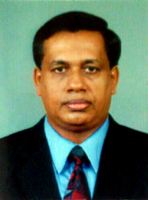
Joseph N. Thilakaratne, SRILNAC